Chat Boxes Aren't the Answer to Every Problem
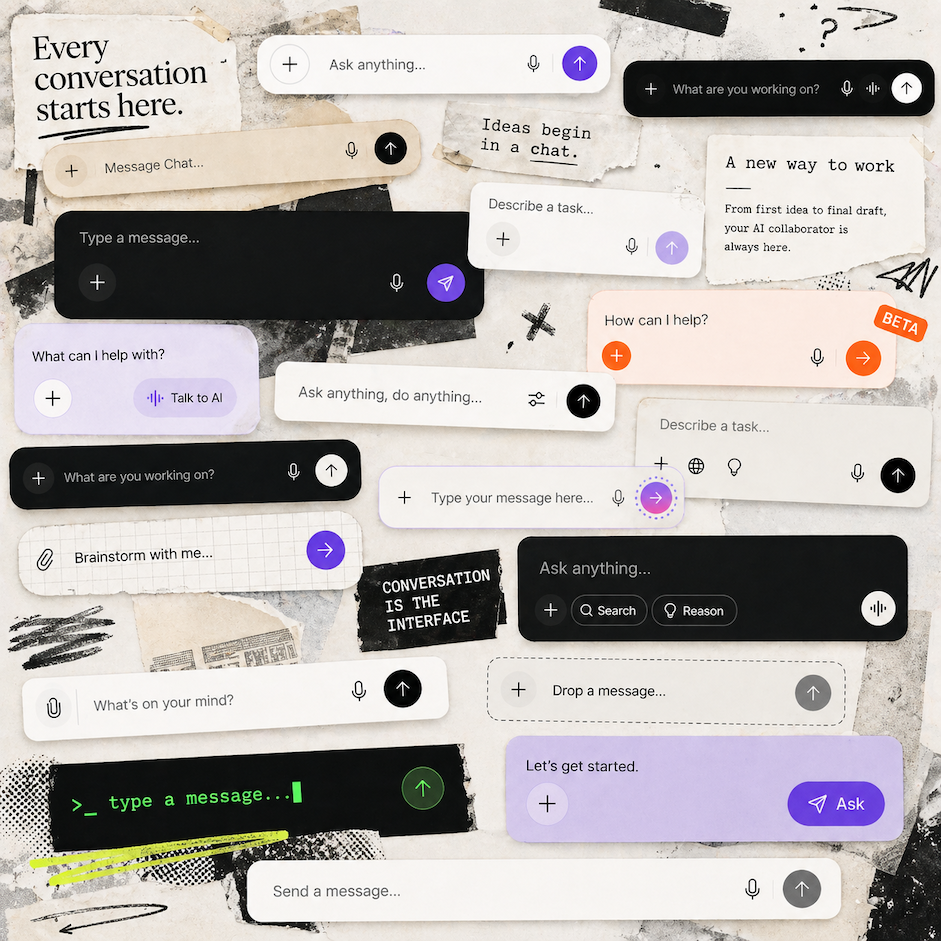
Software interfaces are turning into chat boxes everywhere. I get the rationale. With large language models you don’t have to learn new interfaces when using software. You can just tell the AI what you want through text or voice, and the model will figure things out.
The fact that we can naturally converse with machines today is amazing. It’s the stuff of science fiction, and will continue to advance how we interact with computers. But if chat boxes are the proverbial hammer, do we risk treating every problem like a nail?
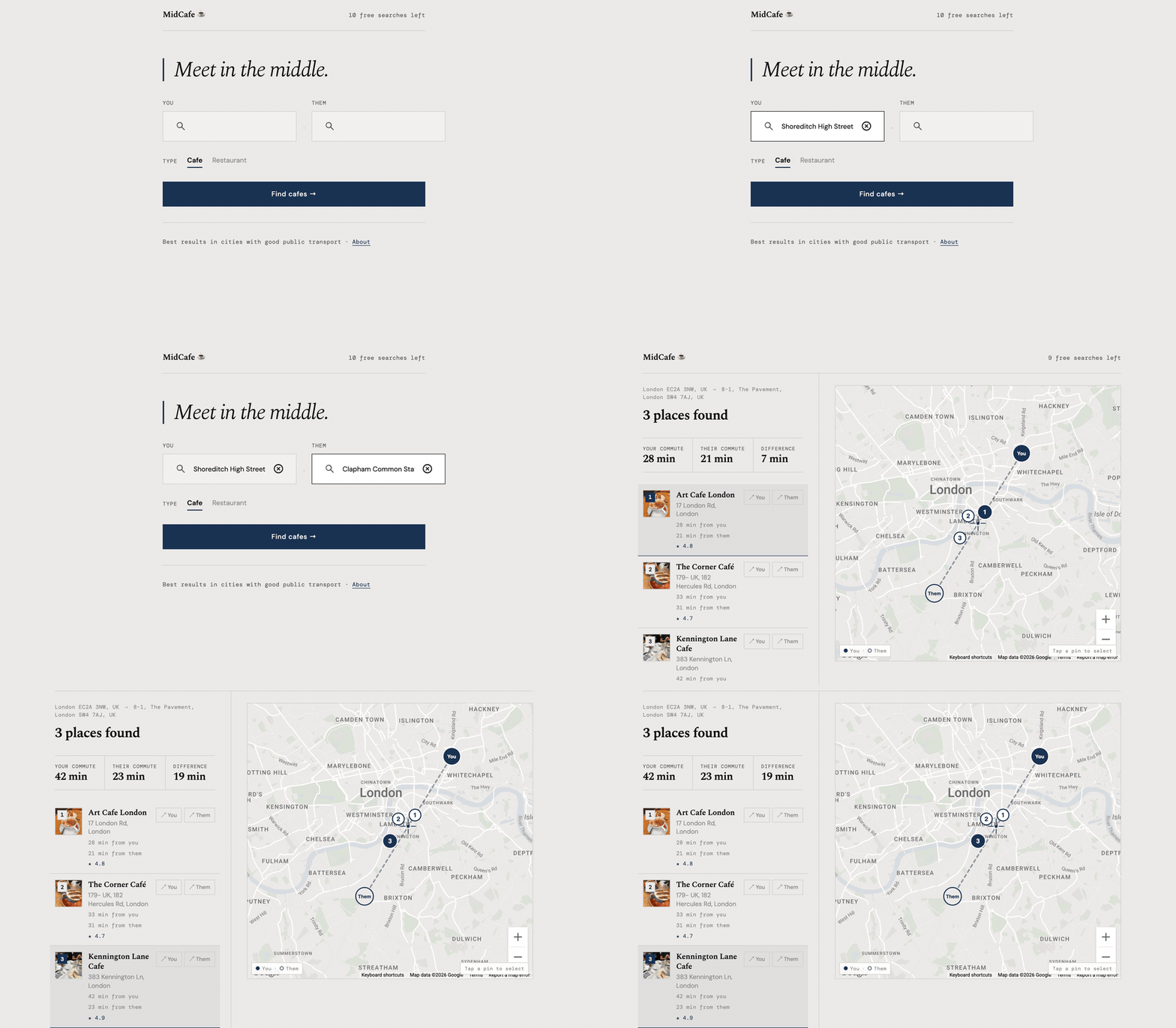
Here’s what I mean. I do a lot of coffee meetings, and Google Maps was too cumbersome for finding cafes halfway between two locations. So about three years ago I built MidCafe, a micro web app to solve that problem. In the years since, AI chatbots have improved massively and I’d have expected to sunset my app and use ChatGPT instead. Yet, I still use MidCafe. Here’s why.
Let’s say my office is in Shoreditch and I’m meeting someone from King’s Cross. I want to find options that are roughly equidistant for everyone. I can ask ChatGPT or Gemini for suggestions. Here’s what I get.
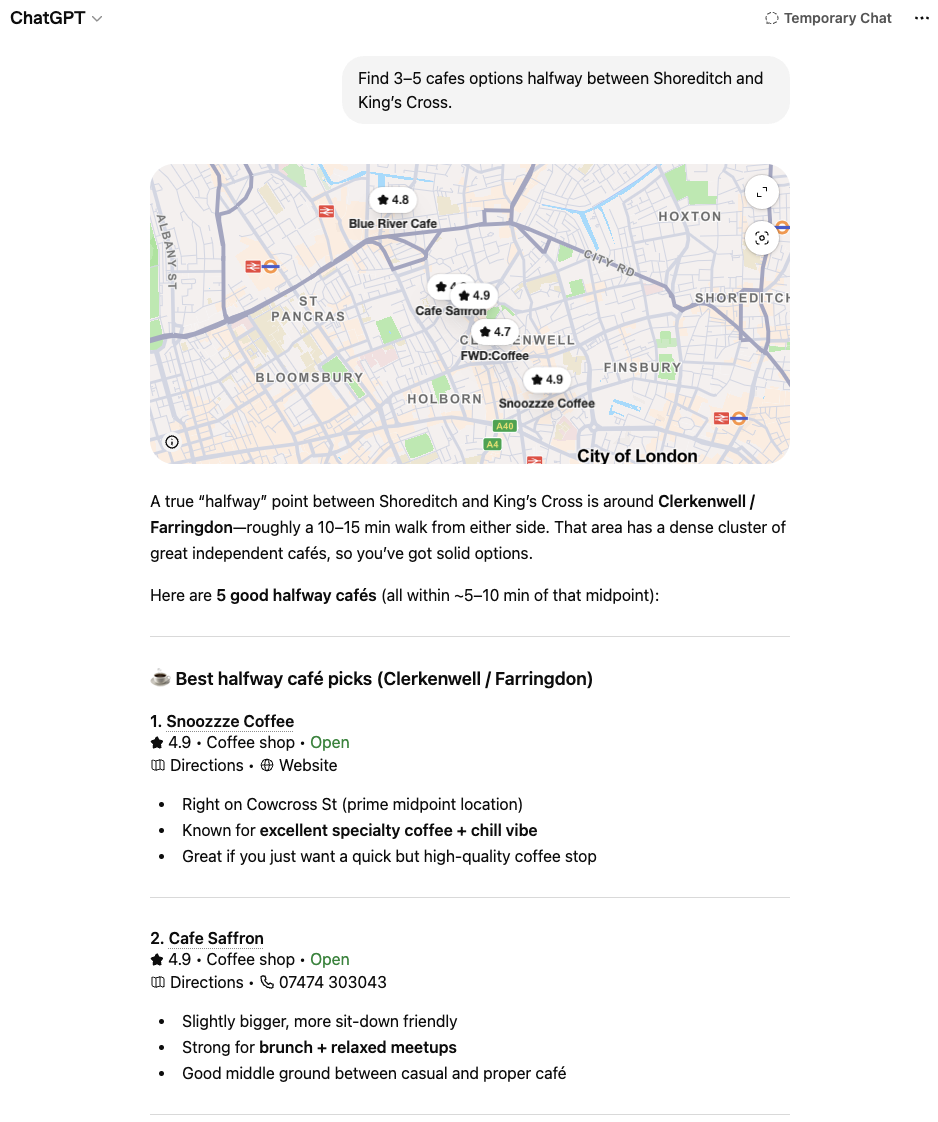
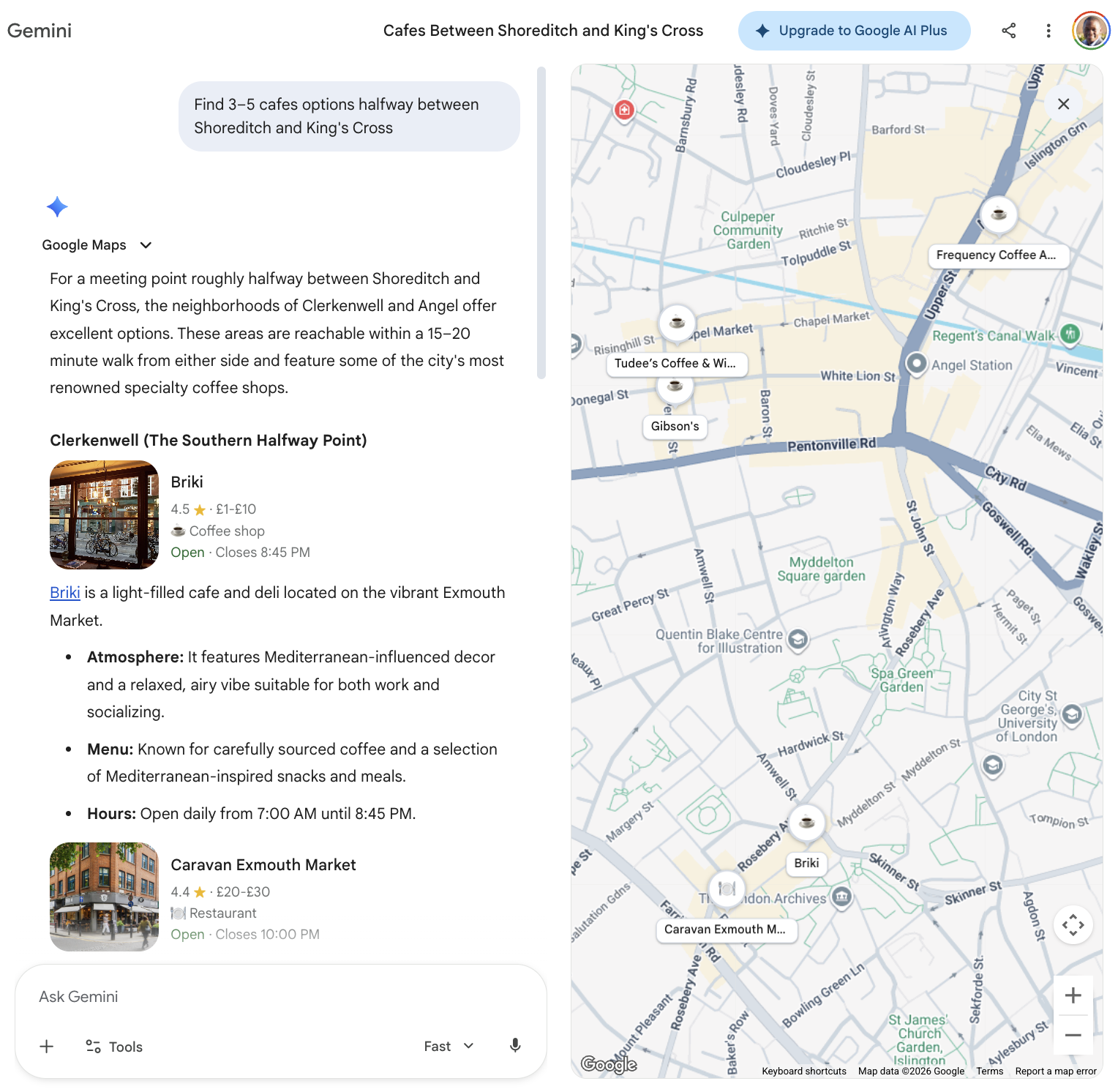
The answers are reasonable. You get a list of places with notes explaining the choices. But the experience is wordy and computationally expensive.
Here’s the same task using MidCafe.
That said, a chat box can still work in a similar scenario. The request just has to be broader. Google Maps has launched a feature called Ask Maps, and the example query on its marketing page makes this point.
In the demo, a user asks, “Plan out my February road trip, Grand Canyon, Horseshoe Bend, Dunes, any recommended stops along the way?” This is the kind of vague brief that LLMs are good at, and no traditional interface could anticipate it.
So there’s a useful split to consider here. General-purpose chat is brilliant for the long tail of requests — as vague as they might be — where inputs and outputs don’t fit a clear pattern.1
In contrast, when it comes to short, frequent, well-defined tasks that fill most of our lives, I suspect that a familiar UI will beat verbose inputs and outputs. Chat boxes do offer amazing flexibility. But they aren’t suitable for every problem.
1 One promising area here is AI-generated interfaces, where the model generates a UI on the fly. This will handle these requests even more intuitively, but demands more computation and a bit of cognitive overhead each time.